
On the Island of the Gods, Bali, dance is more than just a form of entertainment. It is a sacred language, a living heritage, and an offering to the divine. At the crossroads of religious ritual and artistic performance, Balinese dances captivate with their beauty, symbolism, and emotional depth. They tell ancient stories, embody mythical characters, and invite the audience into a spiritual and cultural journey that bridges the visible and invisible worlds.
A sacred art at the heart of Balinese life
In Bali, Hinduism is not just a religion, it’s a way of life. Spirituality is deeply woven into everyday routines, from daily offerings placed outside homes and shops to elaborate temple ceremonies. Dance, in this context, is not a leisure activity but a vital form of religious expression and community identity.
Every village, no matter how small, has at least three temples dedicated to different deities. These temples regularly host ceremonies called odalan, which mark their anniversaries. During these events, dance becomes a central element, performed as a living prayer, a sacred offering to the gods, and a means of maintaining cosmic balance.
Dancers prepare not just physically but spiritually, purifying themselves through rituals before stepping into the temple. In some dances, like the Sanghyang Dedari, performers may fall into trance, believed to be possessed by benevolent spirits. Such moments underline how Balinese dance operates at the border of the sacred and the theatrical.
A wide variety of styles and functions
Balinese dances fall into three main categories based on their level of sacredness and context:
- Wali (Sacred dances) : performed only in temple sanctuaries as part of religious rituals. These dances, such as Rejang or Baris, are deeply spiritual and never intended for tourists.
- Bebali (Semi-sacred dances) : used in temple outer courtyards during ceremonies and sometimes accessible to guests or onlookers.
- Balih-balihan (Secular dances) : created for entertainment, including performances for the public or tourists, though often rooted in older traditions.
This diversity allows dance to serve many functions: to honor deities, teach mythology, entertain, and preserve heritage.
Legong: grace and precision
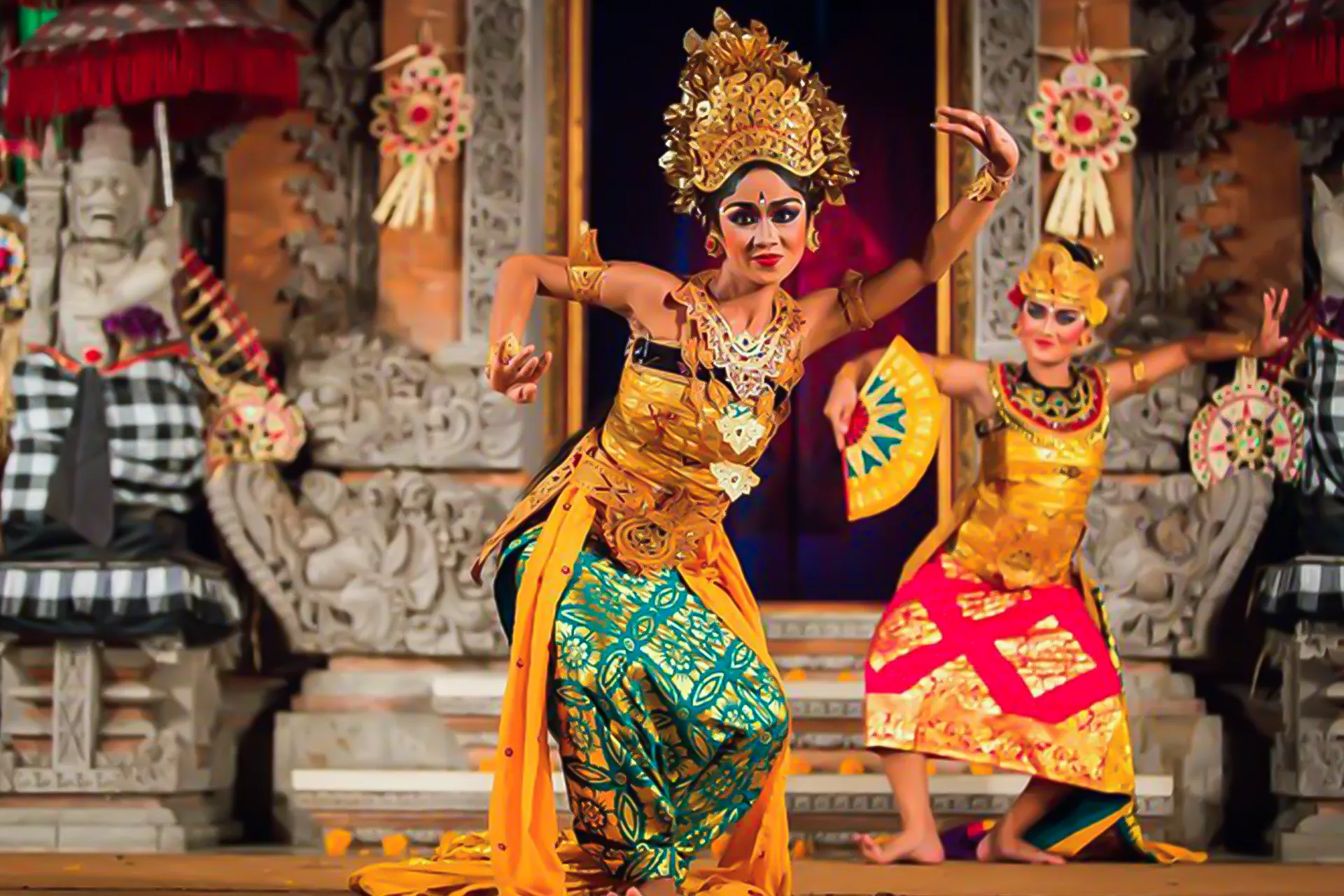
Legong is one of Bali’s most elegant and technically demanding dances. Originally performed by pre-teen girls in royal courts, Legong is known for its refined gestures, vivid facial expressions, and meticulous choreography.
The dance usually portrays classic stories, like the Legong Kraton, which tells the tale of a king, a princess, and tragic fate. Movements are synchronized to the gamelan orchestra, with special emphasis on intricate finger positions, sharp eye movements, and stylized body postures.
Dancers begin training from a young age, often through traditional sanggar (art schools). Their golden costumes and elaborate headdresses enhance the dreamlike quality of the performance. Watching a Legong dance is like seeing a living painting that blends narrative, grace, and musical rhythm into one poetic form.
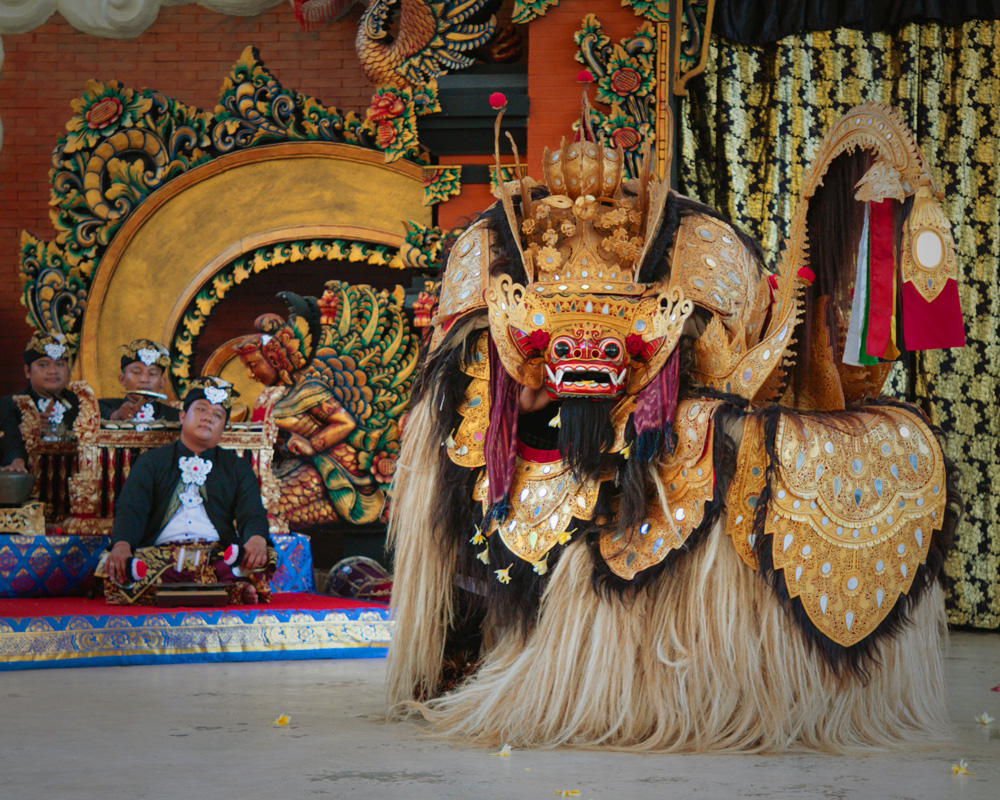
Barong: the battle between good and evil
The Barong dance presents a mythological drama of cosmic duality. The Barong, a lion-like creature, symbolizes protection and goodness, while Rangda, the demon queen, embodies chaos and destruction.
The performance follows a classic tale of struggle between these two forces. Accompanied by intense gamelan music and masked actors, the dance often includes trance sequences where performers seemingly become impervious to harm.
The Barong dance is not just spectacle, it is a deeply symbolic ritual. Villagers believe it brings spiritual balance, protects communities from misfortune, and strengthens links to the unseen world. Even when performed for tourists, many aspects of the ritual remain intact, especially in villages like Batubulan or Ubud.
Kecak: the fire dance
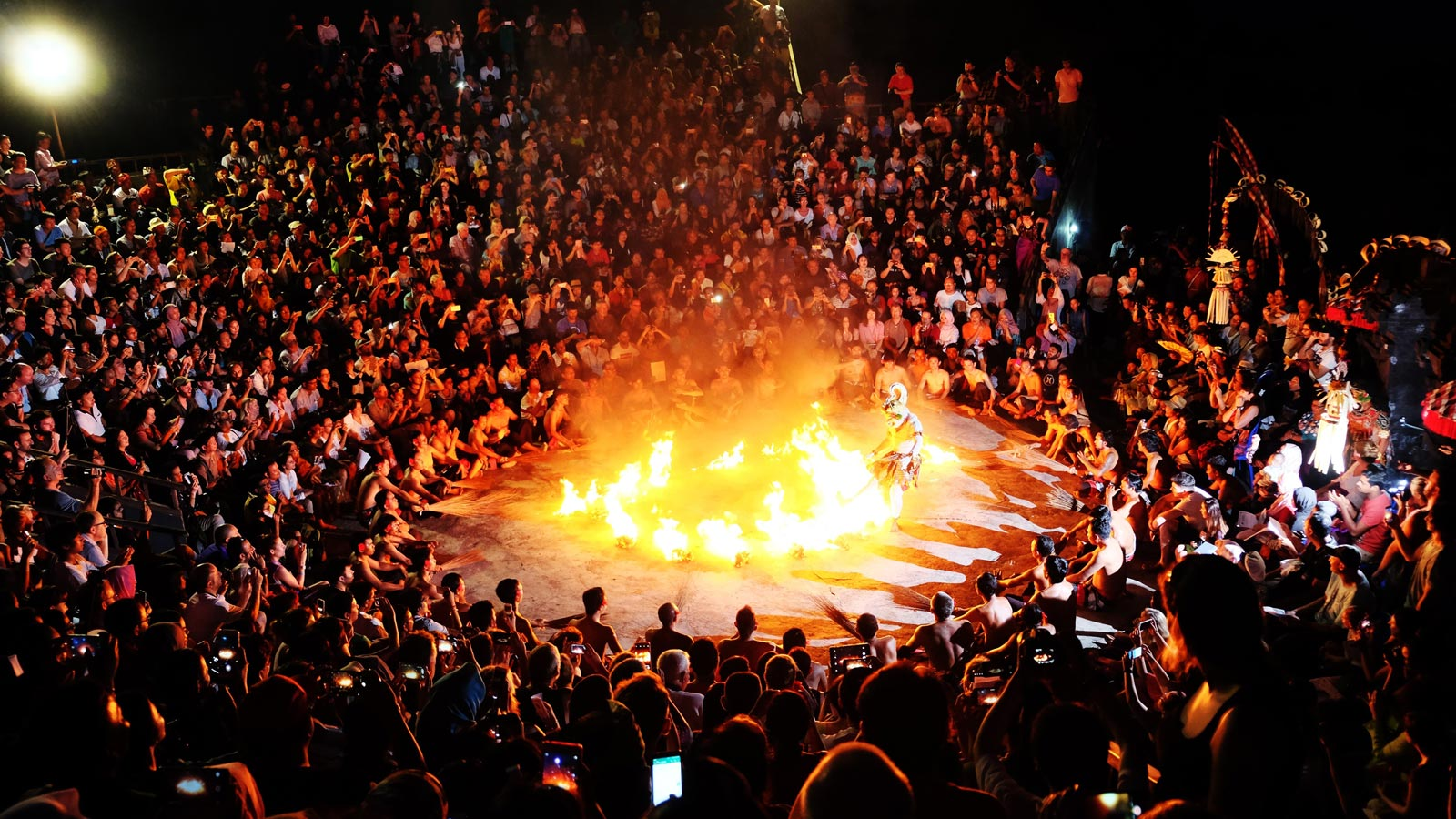
Kecak is one of the most iconic and mesmerizing Balinese performances. Unlike other dances, it uses no instruments, only a chorus of dozens of men chanting “cak-cak-cak” in a hypnotic rhythm while seated in concentric circles.
The dance recounts a scene from the Hindu epic Ramayana, where Prince Rama must rescue Princess Sita from the demon king Ravana. The monkey god Hanuman and his army, represented by the chanting men, assist in the battle.
Kecak is often performed outdoors, especially at Uluwatu Temple, where dancers are silhouetted by the setting sun and framed by the sea. In some versions, the show ends with a fire-walking ritual, where a dancer in trance walks barefoot through burning embers.
Originally developed in the 1930s with Western influence, Kecak was designed for performance but based on sacred chants and rituals. It bridges spiritual meaning with visual drama.
Pendet: a dance of welcome
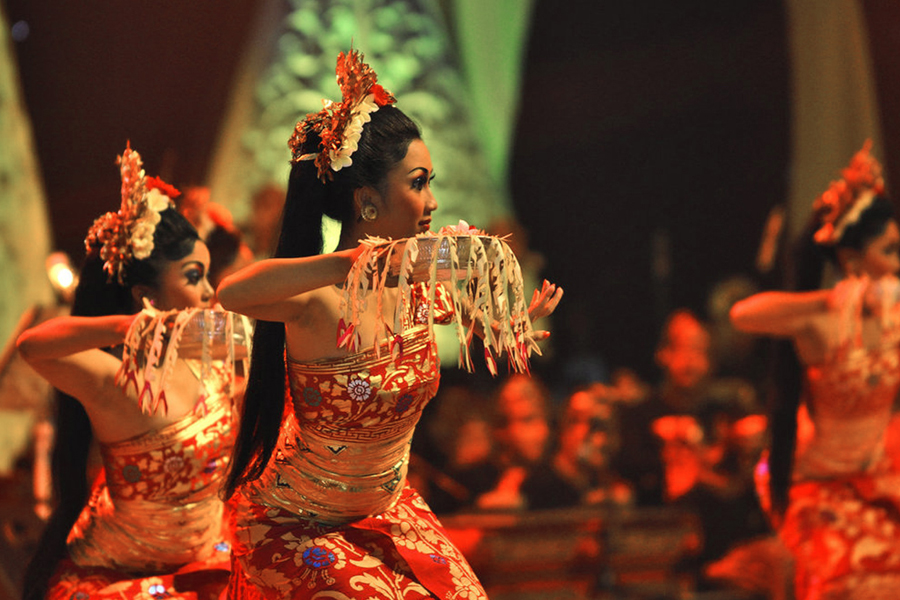
Pendet is a simple but powerful dance, traditionally performed by young women carrying bowls of flower petals. Originally used to purify temples and invite gods into sacred spaces, it has evolved into a welcoming dance for guests.
Performed at the beginning of ceremonies or public events, Pendet symbolizes hospitality, beauty, and the island's joyful spirit. The choreography is less rigid than Legong, allowing more personal expression while still maintaining symbolic gestures.
Even today, Balinese girls often learn Pendet as their first dance, making it a cultural gateway into the larger world of traditional performance.
Rigorous and early learning
Balinese children often begin dance training at the age of five or six. It is both an artistic and spiritual education. They attend village sanggar or learn directly from family members, practicing daily to perfect their technique.
The training is intense: dancers must learn to isolate muscles, control their gaze, balance their weight precisely, and sync every move with music. Facial expressions are especially important, eyes must shift rapidly, eyebrows raise or lower with meaning, and smiles or frowns are choreographed.
Learning dance is also about inner discipline. Many dancers speak of entering a meditative state during performance, connecting with ancestors or spiritual forces. It is not just movement, but presence.
A living tradition in a touristic context
Tourism in Bali has created both opportunities and challenges for traditional dance. On the one hand, it offers visibility, income for artists, and a reason to keep ancient forms alive. On the other, it can lead to simplification or “stage-ification” of rituals once meant only for gods.
Some dances have been shortened or modified to fit tourist schedules. Costumes may be made flashier, and narrations added to explain meaning to foreign visitors. This shift can risk diluting the original sacredness of the performance.
Still, most Balinese communities work to preserve authenticity. Ceremonial dances are rarely open to the public and are carefully maintained by village elders. At the same time, new forms and choreographies emerge, blending tradition and innovation to ensure continuity.
A window into the Balinese soul
Balinese dance is a mirror of the island’s soul. Through gesture, rhythm, and ritual, it expresses a worldview where humans, nature, and spirits are intertwined. It is not just performance, it is offering, memory, identity.
To see a Balinese dance is to feel something ancient and alive. Whether in a temple courtyard filled with incense, on a coastal stage under the stars, or in a humble village celebration, the energy is the same: respectful, emotional, deeply human.
These dances continue to evolve, yet they remain anchored in centuries of meaning. They remind us that art can still carry the sacred, and that in Bali, the body can speak the language of the gods.