
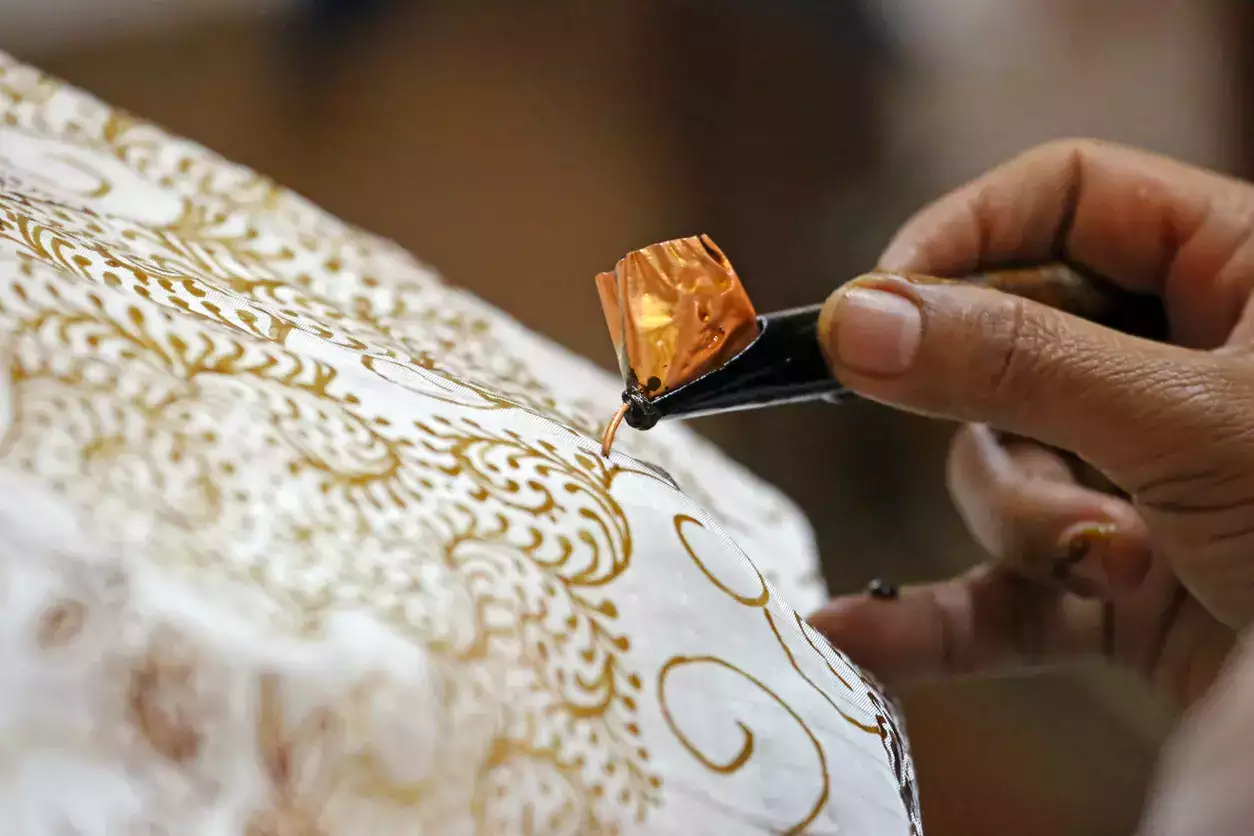
 Batik is much more than just a colorful fabric: it is a deeply rooted textile tradition, born in Indonesia, particularly on the island of Java, and now practiced around the world. At the crossroads of art and craftsmanship, this technique is based on the principle of resist dyeing, using wax to draw patterns before applying color. Each piece of batik is unique, the result of meticulous work often loaded with symbolism. The motifs are not chosen randomly, they reflect stories, prayers, and social meanings deeply embedded in Indonesian life. Batik is both a visual and emotional heritage.
Origin and meaning of the word "batik"
The word batik comes from Javanese baṭik, derived from Proto-Austronesian, and refers to the idea of decoration or dot (titik). It literally means “to write in dots,” referring to the method of applying wax to fabric. In many languages, the term now refers to any wax-resist dyeing technique. However, in Indonesia, especially in Java, batik is much more than a textile process: it is a living and cultural heritage. It represents a way of life, a philosophical vision of the world, and a collective memory passed down through generations. Wearing batik is not only about aesthetics, it is about carrying a message of identity and belonging.
An ancient and transnational history
Wax-resist dyeing techniques already existed in antiquity: in Egypt, China, India, and West Africa. But it is in Indonesia that batik reached an unmatched level of refinement, notably thanks to its transmission within Javanese royal courts, where it was considered an elite art. The oldest preserved pieces of batik date back to the 13th century and were discovered in Central Java. The development of batik was influenced by religions, Hinduism, Buddhism, then Islam, maritime trade with India and China, as well as the arrival of European colonists during the colonial period. This cultural blending enriched both the patterns and techniques. Some motifs have Chinese origins, others Indian, while some are purely local or created for specific royal families. Over centuries, batik became a bridge between regions, faiths, and artistic styles.
The role of batik in Indonesian culture
In Indonesia and especially in Javanese culture, batik holds a central role in many aspects of life:
- It is a social marker: in the past, certain patterns were reserved for royalty and nobility. The famous Parang Rusak motif, with its diagonal waves, symbolized power and perseverance and was worn only by sultans. Other motifs indicated clan, origin, or social function.
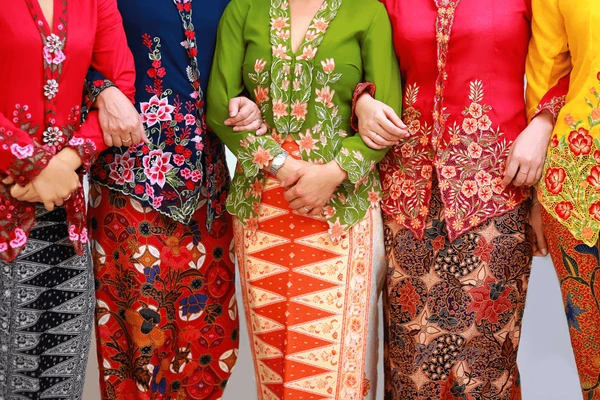
- It is a key element of ceremonial dress, particularly in the royal courts of Yogyakarta and Surakarta (Solo). Sacred dancers of the Bedhaya, a ritual dance performed in royal courts, wear costumes with strictly codified patterns, chosen according to role, hierarchical position, and the spiritual purpose of the event.
- It is linked to major life events: birth, marriage, mourning… Each motif may carry a wish, a blessing, or a protective intention. For example, the Truntum pattern symbolizes eternal love and is often worn by parents of the bride during weddings.
Beyond these codified uses, batik is also part of everyday life: Indonesians wear it as shirts, skirts, dresses, or sarongs, according to personal taste. This traditional textile adapts to all generations, social classes, and occasions. Batik is worn in offices, schools, government institutions, and at family gatherings, blending tradition with modernity.
Manufacturing techniques
Batik production relies on the resist dyeing principle, applying hot wax to the fabric to prevent certain areas from absorbing the dye. Once the wax is removed, the patterns appear in contrast. Several cycles of waxing and dyeing allow for the creation of complex, multicolored designs. Some pieces require up to a dozen dye baths and months of work, especially for handmade ones.
Basic steps include:
- Fabric preparation: the cotton or silk is washed, soaked, and beaten to ensure the dye will penetrate evenly.
- Pattern drawing: designs are first sketched in pencil, then wax is applied using traditional tools. The wax, made from a mixture of beeswax and natural resins, is carefully controlled to avoid cracking.
- Dyeing: only areas without wax absorb the color. The fabric is then dried, rewaxed, and redyed if needed.
- Removing the wax: by boiling the fabric or scraping it gently.
- Repeating the process: for each additional color or layer of complexity.
This long and careful process requires precision, patience, and great artistic sensitivity.
The three main techniques
There are several ways to produce batik, each with different results:
- Written batik (Batik Tulis)
Made entirely by hand with a canting, a small copper tool with a spout for pouring wax. This allows for very fine and detailed patterns, with fluid lines and subtle variations. It is the most artisanal and prestigious method, often taking weeks or months for a single piece. Each fabric is considered a one-of-a-kind artwork.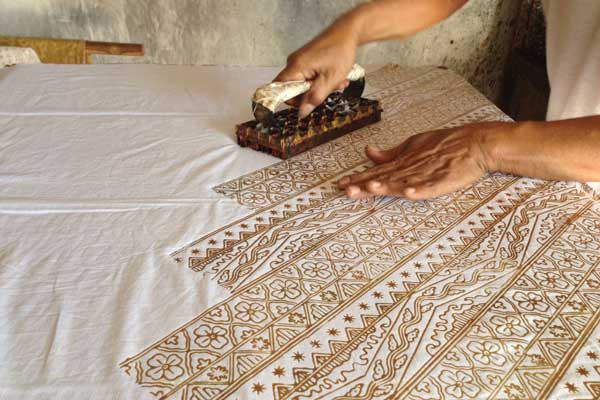
- Stamped batik (Batik Cap)
Uses a copper stamp (cap) to print wax patterns in repetitive designs. It is a faster and more economical technique, better suited for mass production. Although less detailed than hand-drawn batik, it still requires skill to align the patterns correctly.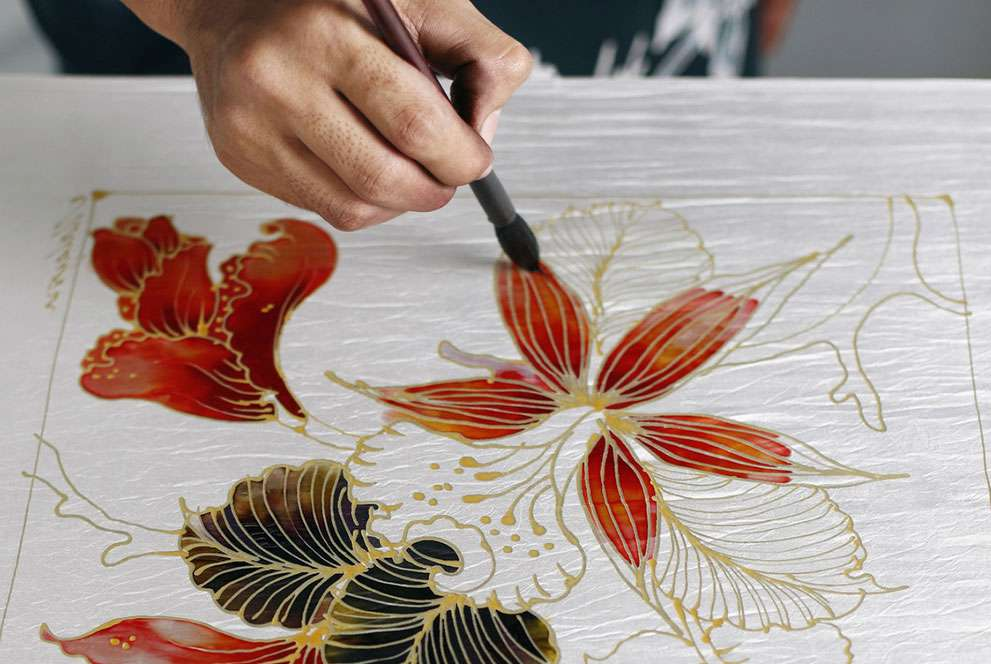
- Painted batik (Batik Lukis)
A more contemporary method, where wax is applied using a brush, cotton ball, or even fingers. This allows for abstract forms, free expression, and vibrant compositions. It is popular among modern artists and designers who want to break from traditional constraints.
An art recognized by UNESCO
On October 2, 2009, UNESCO recognized Indonesian batik as an Intangible Cultural Heritage of Humanity, in its traditional forms batik tulis and batik cap, as well as in its methods of transmission. This date is now celebrated each year as Hari Batik Nasional (National Batik Day), when Indonesians are encouraged to proudly wear batik clothing in schools, offices, and public places.
This international recognition highlights not only the beauty of this art form but also its educational, social, and cultural value. It encourages the younger generation to reconnect with ancestral knowledge and promotes the role of women in artisanal transmission, since many batik artisans are women.
Between tradition and modernity
Today, batik continues to reinvent itself. Indonesian designers incorporate this textile into contemporary fashion, creating dresses, blouses, and accessories that appeal to young people. Artists use it as a medium for visual expression, exploring personal, political, or ecological themes.
Workshops across Java and Bali perpetuate ancestral techniques, often passed from mother to daughter, while specialized schools train new generations. Batik is also an export product, known for its quality and authenticity, attracting the interest of collectors, fashion designers, and researchers around the world. Countries like Japan, the Netherlands, and the United States now import Indonesian batik for fashion, interior design, or artistic exhibitions.
Batik is not only surviving, it is thriving, adapting to the challenges of the modern world while preserving its deep cultural essence.