
From the 7th to the 15th century, Indonesia experienced a golden age of art and culture, deeply shaped by Indian influence. Through maritime trade routes, Indian merchants, monks, and priests brought not only goods, but also religions, epics, languages, and artistic styles that would profoundly transform the archipelago. During this time, monumental temples, refined sculptures, sacred manuscripts, and a unique artistic language emerged, blending local traditions with Indian elements.
The Arrival of Indian Religions
Hinduism and Buddhism were the two major religions introduced from India, and they played a central role in the spiritual, political, and artistic life of early Indonesian kingdoms. From the 7th century onward, Buddhism took root in Sumatra, particularly through the powerful maritime kingdom of Srivijaya. Hinduism, on the other hand, found fertile ground in Java, especially under the Sanjaya and later Majapahit dynasties.
These religions were not forced upon the population, but rather adopted by kings who saw them as tools of power and legitimacy. By aligning themselves with deities like Shiva or the Buddha, rulers reinforced their divine status while fostering the growth of sacred art and architecture.
Srivijaya: Art and Buddhist spirituality
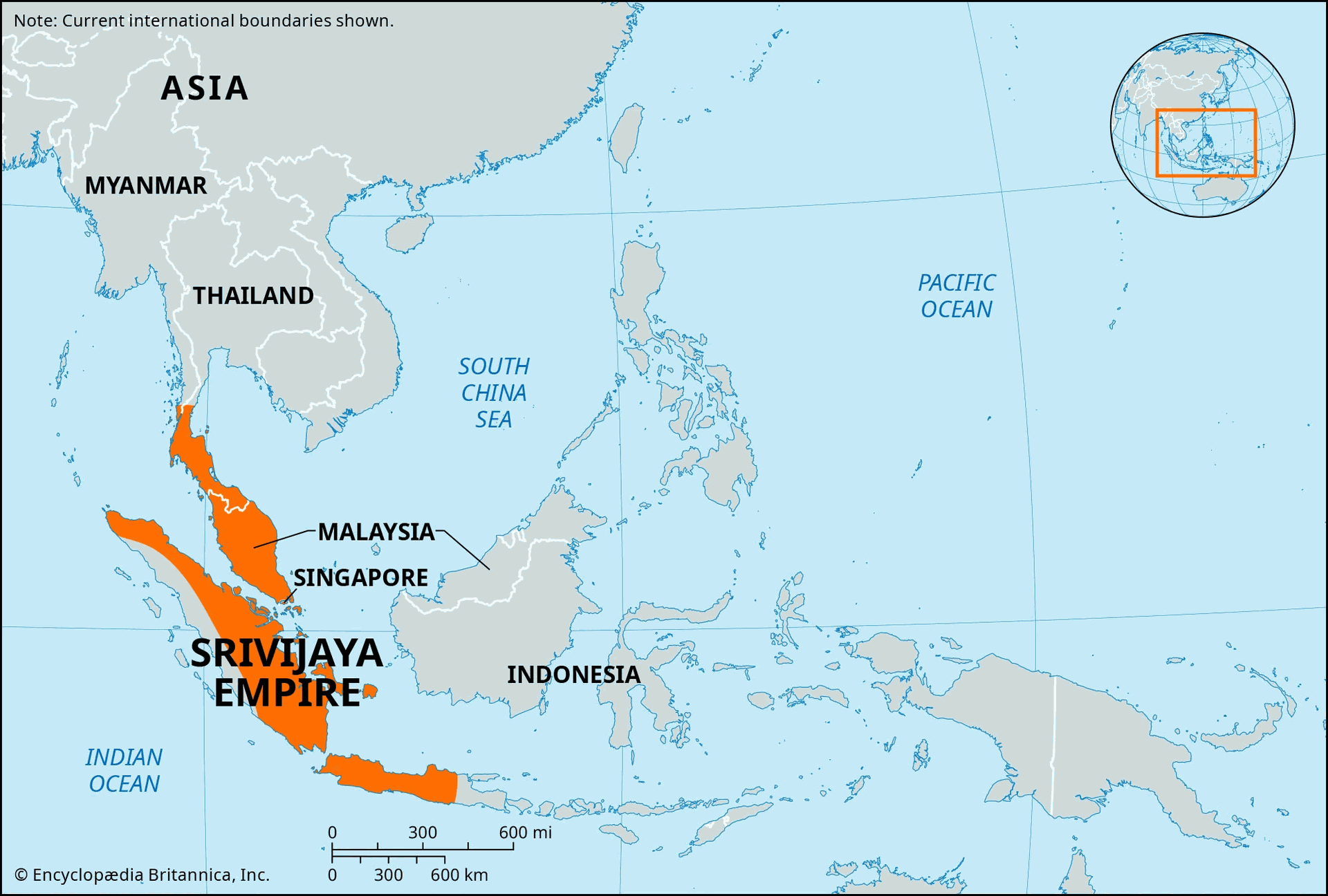
The Srivijaya Kingdom (7th–13th centuries), based in Palembang (Sumatra), played a major role in spreading Buddhism in Southeast Asia. Strongly connected to Indian centers of learning such as Nalanda University, Srivijaya became a hub for Buddhist scholars and pilgrims. The kingdom’s art was deeply religious, producing elegant bronze statues of bodhisattvas and Buddhas in meditation.
These works reveal clear inspiration from Indian Gupta art, with stylized postures, symbolic gestures, and serene expressions. Yet they also show local creativity: the figures often have softer features, more detailed jewelry, and fluid forms adapted to regional tastes and materials.
Borobudur: A Buddhist masterpiece
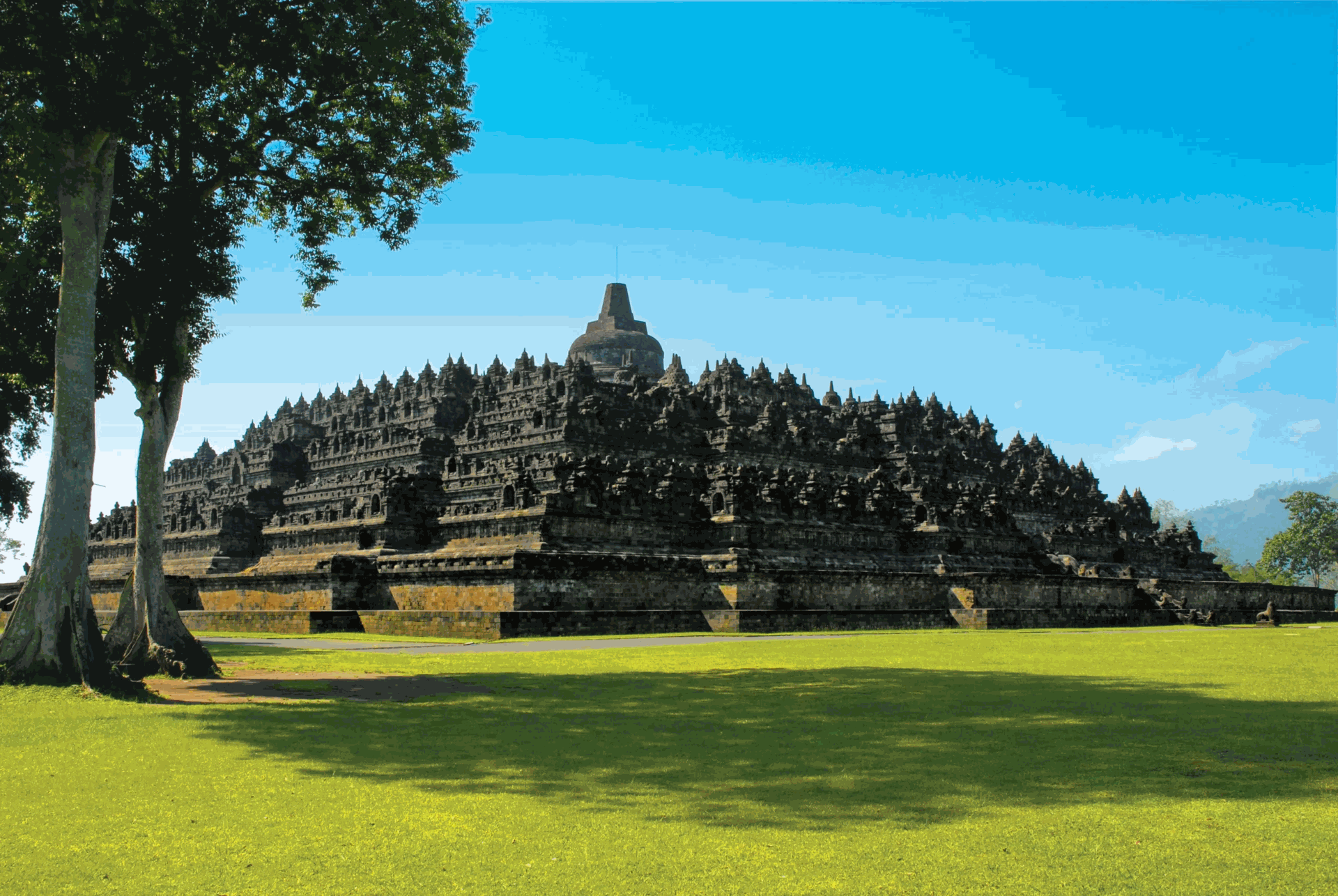
In Central Java, Indian influence reached its peak with the construction of Borobudur, a monumental Buddhist temple built in the 9th century under the Sailendra dynasty. Borobudur is one of the greatest Buddhist monuments in the world. Shaped like a sacred mountain and a mandala, it symbolizes the spiritual journey from the earthly realm to enlightenment.
The temple consists of nine platforms, rising to a central dome, and is covered with over 2,600 carved stone panels and more than 500 Buddha statues. The reliefs narrate stories from the life of the Buddha and scenes of daily life in ancient Java, showcasing both spiritual depth and an extraordinary level of artistic detail.
Borobudur’s layout guides pilgrims upward through symbolic stages, from desire and suffering at the base to wisdom and liberation at the top. It is not only a religious site but also a philosophical monument made of stone.
Prambanan: Hindu Art in Majesty
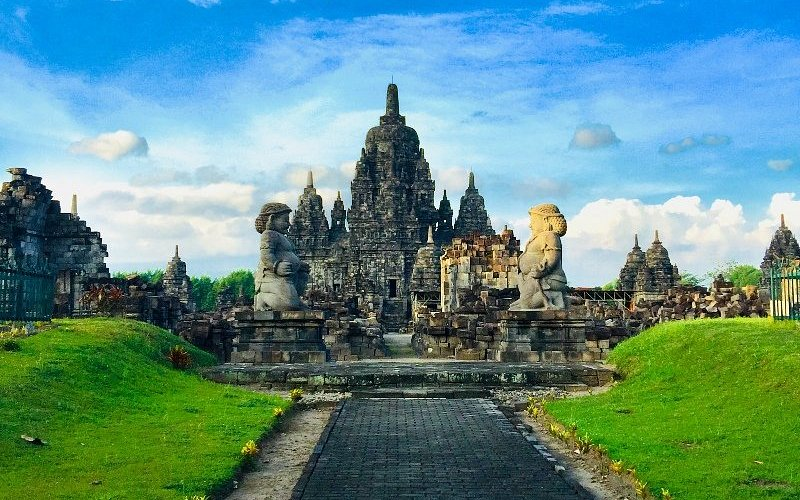
Near Borobudur stands Prambanan, a magnificent Hindu temple complex built in the 10th century by the Sanjaya dynasty. Dedicated to the Trimurti, Brahma, Vishnu, and Shiva, Prambanan represents the height of classical Hindu architecture in Indonesia. Its tall spires, elegant symmetry, and detailed stone carvings reflect both Indian aesthetics and Javanese artistry.
The central temple, devoted to Shiva, stands 47 meters high and features exquisite reliefs from the Ramayana, a beloved Indian epic. These carvings are full of movement and expression, portraying gods, demons, and heroes in vivid detail. The composition and storytelling style recall Indian models, but the figures’ facial features and settings are distinctly Javanese.
Merging Styles: Indian Influence and Local Identity
What makes this period remarkable is how Indonesian artists were able to integrate Indian artistic principles into their own cultural context. Sculptures of deities may follow Indian iconography, multiple arms, divine attributes, symbolic postures, but they often feature softer faces, rounded forms, and naturalistic details that reflect local sensibilities.
Narrative reliefs on temple walls show mythological stories but also incorporate scenes from daily life, such as traditional houses, markets, dancers, and musicians. This blending shows that sacred art was not just about distant gods but was deeply connected to the people and places of Java and Sumatra.
The Majapahit Period: A Syncretic Artistic Legacy
In the 13th century, political and artistic power shifted to East Java with the rise of the Singhasari and Majapahit kingdoms. These Hindu-Buddhist states continued the traditions of temple building and religious sculpture, but their style became more localized. Temples like Jago and Panataran mix epic stories with local myths, and their reliefs include fantastical creatures and uniquely Javanese details.
Majapahit-era art is known for its complex terracotta reliefs, symbolic statues, and refined craftsmanship. These works were not only religious but also served to illustrate royal power, cultural values, and moral teachings. Temples became places of worship as well as cultural centers housing libraries, artworks, and ritual objects.
A Living Heritage in Bali
The spread of Islam in Java from the 15th century gradually led to the decline of Hindu and Buddhist art on the island. However, the tradition did not disappear. In Bali, Hinduism remained the dominant religion and preserved many classical forms of Indian-inspired art.
Today, Balinese temples, dances, paintings, and wood carvings continue to reflect the visual and spiritual language of the earlier Hindu-Buddhist period. Gods are still honored in richly decorated sanctuaries, myths are performed through shadow puppetry and dance, and artisans carry on the legacy of centuries-old craftsmanship.
Conclusion
Between the 7th and 15th centuries, the influence of India helped shape one of the most vibrant and sophisticated artistic traditions in Southeast Asia. Hindu and Buddhist art in Indonesia was not a mere imitation of Indian models, it was a creative and dynamic fusion that gave birth to a unique visual culture.
From the grandeur of Borobudur and the elegance of Prambanan to the storytelling of Majapahit temples and the living rituals of Bali, this period left an enduring legacy. It was a time when art served as a sacred bridge between worlds, a means of expressing both divine ideals and human experience, and a foundation for an Indonesian identity rooted in openness, adaptation, and spiritual depth.